
What Is a Stall?
A stall occurs when a motor can no longer produce enough torque to meet the mechanical load demand, causing it to lose synchronism or cease rotation entirely. In a Permanent Magnet Synchronous Motor (PMSM), the rotor is forced to maintain synchronism with the rotating magnetic field when the load torque exceeds the motor’s peak torque capability, synchronism is lost and the motor stalls.
Common conditions under which stall occurs:
- Sudden overload: The mechanical load spikes beyond the motor’s peak torque output, e.g., a jam, blockage, or abrupt increase in friction.
- Insufficient voltage or current headroom: The drive cannot supply enough current to generate the demanded torque, often seen in field-weakening regions or under DC bus sag conditions.
- Thermal degradation: Rising temperature reduces magnet flux, and winding resistance changes alter current delivery, shrinking the available torque envelope progressively.
- Control instability: Poorly tuned current loops, incorrect motor parameters, or sensorless observer divergence can push the operating point into an unstable region and trigger stall.
- Low-speed operation: At very low speeds, especially near zero, the back-EMF is negligible, and current regulation becomes challenging, making the motor more susceptible to stall under load.
Full Stall vs. Partial Stall
Not all stalls are created equal. Understanding the distinction between full and partial stall is critical for designing protection strategies that are both sensitive enough to catch the dangerous cases and robust enough to avoid nuisance trips.
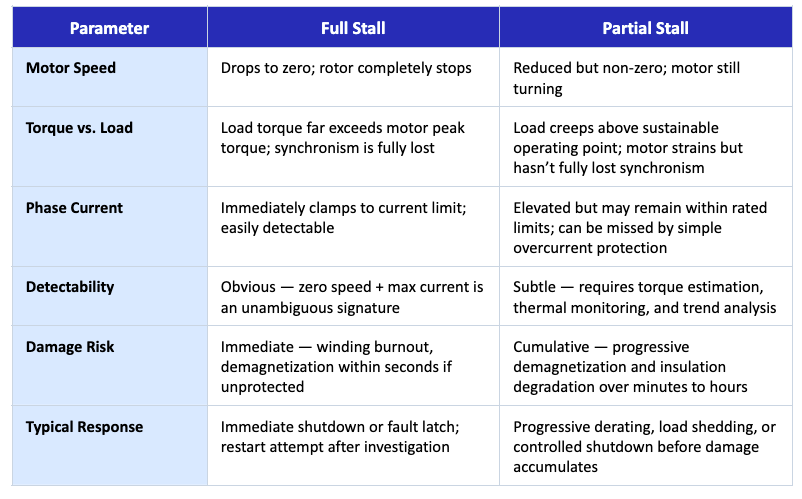
If you’ve ever worked with high-power permanent magnet synchronous motors running at serious voltage levels, you already know the margins are thin. Really thin. One undetected stall and you’re looking at fried windings, demagnetized rotors, and a motor that’s basically expensive scrap.

Partial Stall — The One That Sneaks Up on You
Full stall is obvious. Motor stops, current goes through the roof, something breaks. You can catch that with fairly basic protection. Partial stall, though? That’s the one that quietly kills your system while everything looks fine on the surface.
Here’s what happens: the motor is still spinning, but the load torque has crept past what the operating point can actually sustain. So the motor starts pulling way more current than it should, trying to hold speed. An induction motor would just slip, and you’d see it in the speed signal. A PMSM won’t do that; it’ll keep fighting until something gives. Usually, it’s the permanent magnets. Once they get too hot, demagnetization kicks in, and now you’ve got a motor that’s permanently degraded.

Temperature Makes Everything Worse
This is something a lot of engineers underestimate during the design phase. Temperature doesn’t just add thermal stress; it fundamentally changes how the motor behaves under partial stall.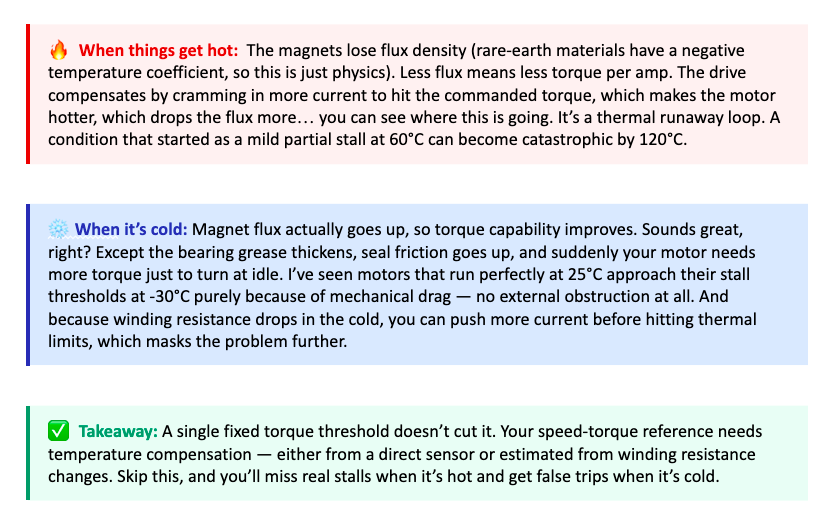
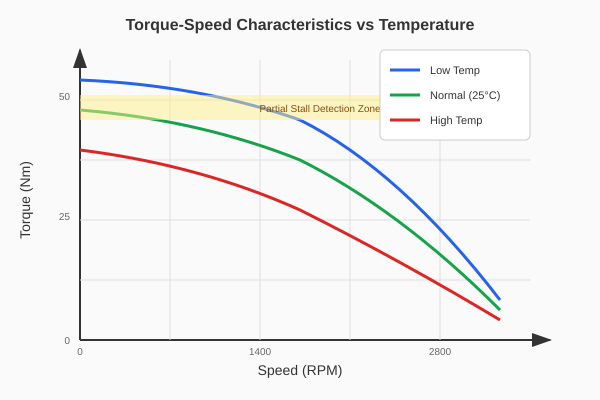
Figure 1: Torque-speed curves shift with temperature — the operating envelope isn’t static.
So, How Do You Actually Detect It?
Catching a partial stall means you need continuous torque estimation. For a PMSM, that boils down to watching the d-q axis currents and comparing your estimated torque against a known-good speed-torque reference curve.
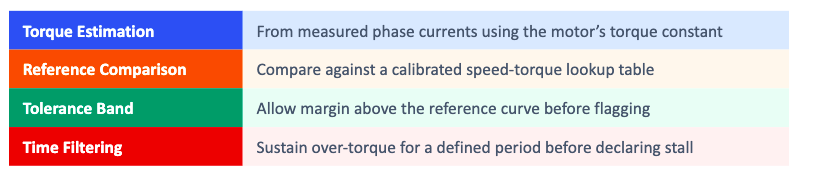
That time window is where a lot of the tuning headaches live. Set it too short, and you’ll get false alarms every time the load hiccups. Set it too long, and you risk thermal damage before the system even reacts.
Recovery: Don’t Just Shut Down — Derate
Detecting the stall is only half the job. What you do next matters just as much.
The approach I’ve had the most success with is progressive derating. When a partial stall is flagged, drop the speed command by a calibrated step. Wait for things to settle. Check torque again. If it’s still elevated, drop again. Keep going until either the stall condition clears or you hit a minimum speed floor, at which point you declare a fault.

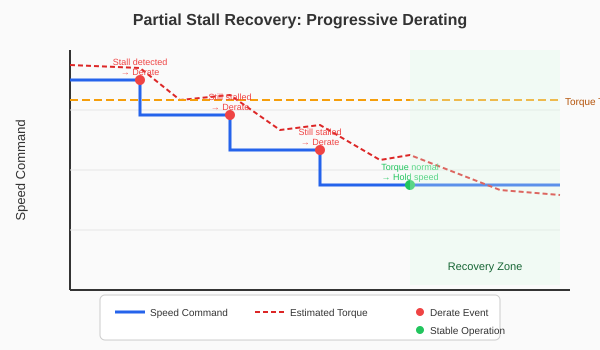
Figure 2: Progressive derating during partial stall recovery.
Other recovery strategies worth considering:
- Torque limiting with automatic re-ramp: Rather than stepping down speed, cap the torque command directly at a safe ceiling and let the speed find its own equilibrium. Once the load signature normalises, ramp torque back up gradually. This avoids the speed transient that derating introduces and can be smoother for load-sensitive applications.
- Controlled reverse-jog: A brief, low-amplitude pulse in the opposite direction can dislodge mechanical obstructions before the forward command is reinstated — particularly effective for fan and pump loads where debris is a common culprit.
- Predictive intervention via thermal modelling: Rather than reacting once stall is already in progress, a real-time thermal model can project whether the current operating point is on a trajectory toward a stall boundary and trigger pre-emptive derating before the condition fully develops. This trades a small efficiency margin for a significant reduction in recovery events.
The right recovery mechanism depends heavily on the application, load profile, and how much downtime is acceptable. Progressive derating is a strong default, but a well-designed drive should carry more than one tool in its recovery kit.
Full Stall: When the Motor Actually Stops
Full stall detection is more straightforward; speed drops to basically zero while you’re still commanding motion. The interesting part is recovery.
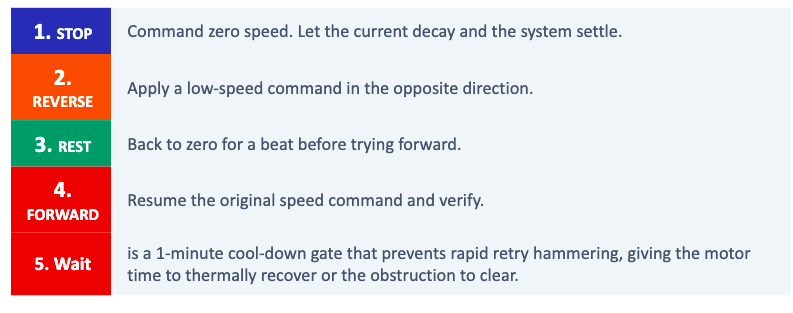
If the motor doesn’t come back up to speed within a verification window, repeat the cycle. After a set number of failed attempts, transition to a hard fault.

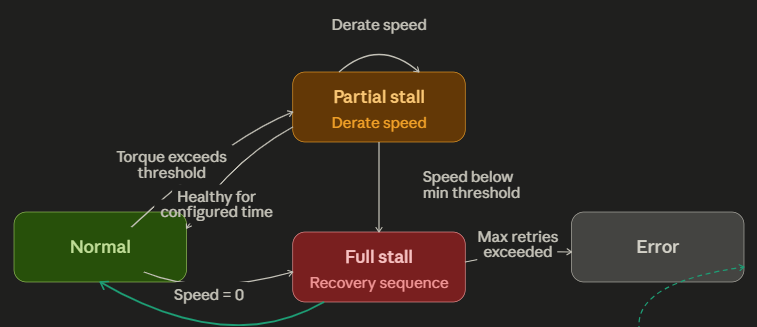
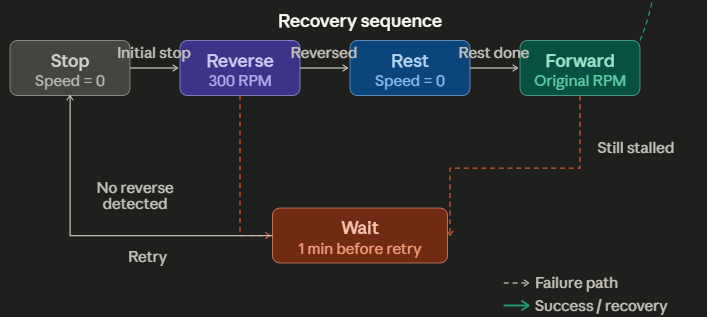
Figure 3: Stall detection and recovery state machine.
The Thermal Clock Is Always Ticking
At high voltage and high torque, stall conditions get dangerous fast. Phase currents can hit several multiples of rated values. The rotor stops getting any cooling airflow. Winding temperatures climb exponentially. And the magnets start creeping toward irreversible demagnetization territory.

Practical Implementation Notes
A few things that tend to bite people during implementation:
- Torque estimation accuracy is only as good as your current sensor calibration and your knowledge of the motor’s torque constant. Garbage in, garbage out. If your current sensors are off by 5%, your torque estimate is off by 5%, and your detection thresholds become unreliable.
- Speed measurement at low RPM is tricky. A lot of encoders and resolvers lose accuracy down near zero speed. If you’re using sensorless estimation, make sure it’s been validated specifically for near-stall operation; many sensorless schemes fall apart right when you need them most.
- Reference tables need to come from actual motor testing or, at minimum, from solid manufacturer data. Don’t just use theoretical curves. I’ve seen theoretical models overestimate continuous torque capability by 15–20% compared to what the motor actually delivers in a real enclosure with real thermal conditions.
- Timing synchronization between the detection algorithm and the motor control loop matters. Race conditions between detection and control can lead to some really confusing failure modes.
- Diagnostics log your stall events with as much context as possible: speed, current, temperature, timestamps. Your field service team will thank you when they’re trying to figure out why a unit tripped at 3am.
Every Application Is Different
There’s no one-size-fits-all parameter set here:
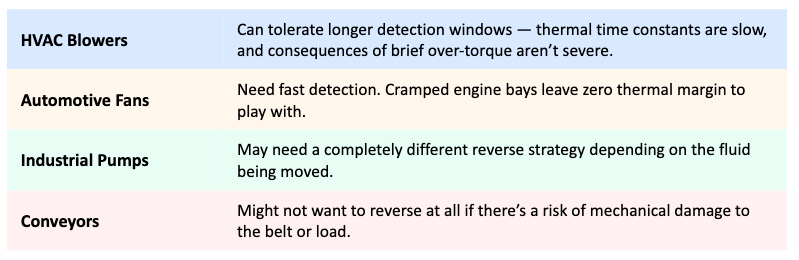
Each application needs its own calibration pass, tuned to actual motor ratings, thermal margins, expected load profiles, and whatever safety standards apply.
Wrapping Up
If you’re building a high-Voltage PMSM drive and stall detection isn’t on your feature list yet, put it there. Partial stall monitoring with progressive derating, combined with full stall detection and a smart recovery sequence, will save motors and save you from some very unpleasant warranty conversations.