The bottleneck that no roadmap accounts for
Imagine a growing chip company. In one quarter, they win three new SoC designs. Their software teams want virtual platforms so they can write drivers, boot Linux, and validate firmware months before silicon hardware is available. The business case writes itself: ship software earlier, find bugs sooner, reduce dependency on physical hardware.
Then reality lands. Each platform needs SystemC models of the underlying IP, and the engineers who write good SystemC are scarce. The company can’t hire its way out- the talent pool is small, the skill is niche, and demand is climbing across every SoC they take on. The spec-to-model cycle stretches from weeks into months. The platform that was supposed to accelerate development becomes the thing everyone is waiting on.
If this tension feels familiar, you’ve met the problem TVP was built to solve.
Why virtual platforms moved from “nice to have” to “must have”
Before we talk about the potential of TVP as a tool, let’s have a look at the growing need for virtual platforms. They’re no longer lab experiments for a few advanced teams, but are production assets that gate real software schedules. A virtual platform lets you simulate hardware in software, so engineers can develop and test against a model early, instead of waiting for a board.
SystemC and C/C++ modeling is precise, demanding work, and the developer base is thin. So the very capability that’s supposed to compress timelines often becomes a barrier to adoption.
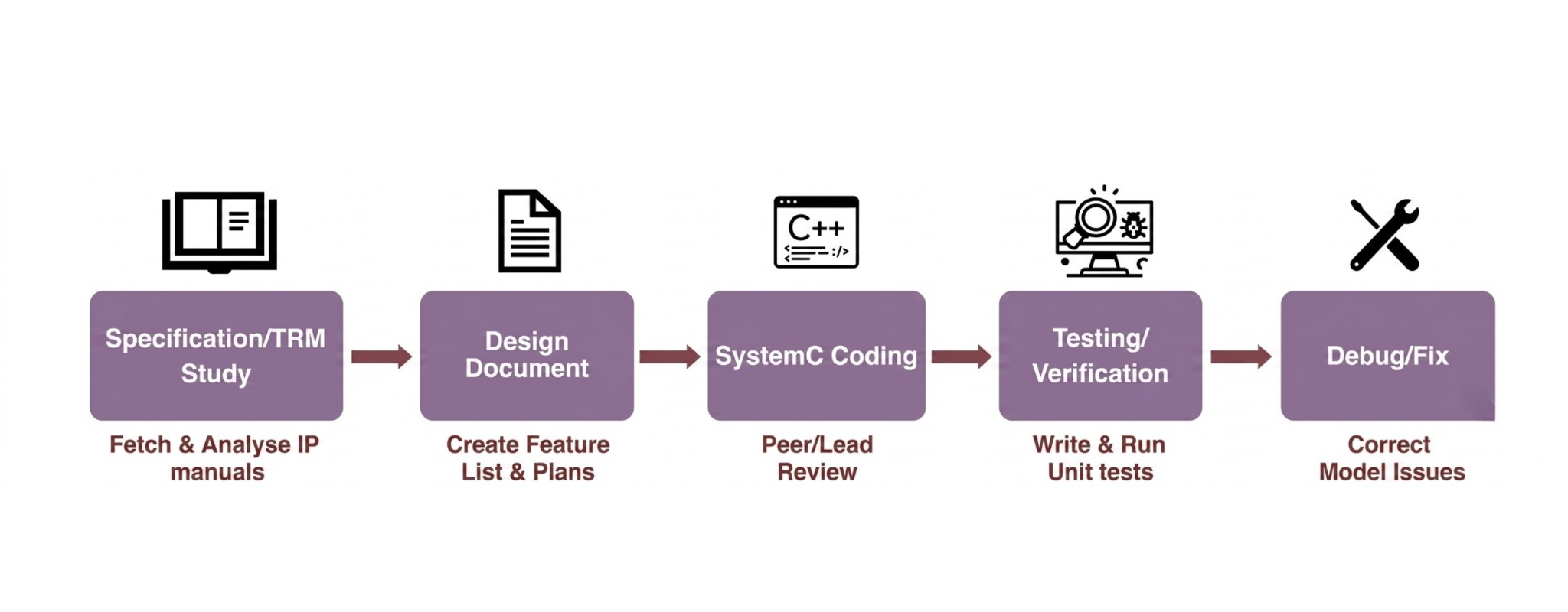
Traditional SystemC Workflow: Key Pain Points
What TVP Actually Is
TVP is an agentic AI tool that automates the creation of virtual platform models, from a hardware IP specification to a verified SystemC TLM model. Built by Vayavya Labs, it treats SystemC modeling as a structured, multi-stage engineering workflow.
This distinction matters. TVP is not “vibe coding.” It isn’t a chat window where you keep rephrasing prompts, hoping for usable output. It’s a workflow-aware, context-engineered system that already knows what to do at each stage- read the spec, plan the design, scaffold the code, implement and test, and carry embedded expert knowledge of how IP models should be built. The engineer’s role shifts from hand-writing SystemC to reviewing and approving the agents’ work.
It belongs to a wider Tvastaa agentic platform family (Vayavya’s Flagship Products):
- Tvastaa Janus automates code and system compliance, tracking safety and security violations.
- Tvastaa Driver generates device drivers and automates hardware-software interface (HSI) workflows.
- Tvastaa VP (TVP) generates the digital twins (virtual platform models) for IPs and SoCs that enable early software development.
Why Do You Need TVP?
For a decision-maker weighing where TVP fits, here’s why we have built it:
- Faster spec-to-model turnaround: Reduce the time from understanding the technical document to generating a usable prototype, dramatically.
- Reduced dependence on scarce SystemC experts: Hiring stops being a bottleneck for project delays
- Consistent code quality across engineers: Output no longer swings with engineers assigned to the task.
- Reduced design and documentation effort. Design docs and test plans are produced as part of the flow.
- Automated test generation and debugging. Verification rides alongside the model instead of trailing it.
- Faster iteration and prototype availability. Software teams start sooner, and changes propagate faster.
The shift to a full agentic workflow can push the SystemC model development to around 80% automation across the modeling lifecycle, with zero manual SystemC authoring on the demonstrated flow. The same engineer works on the project with a far more effective workflow.
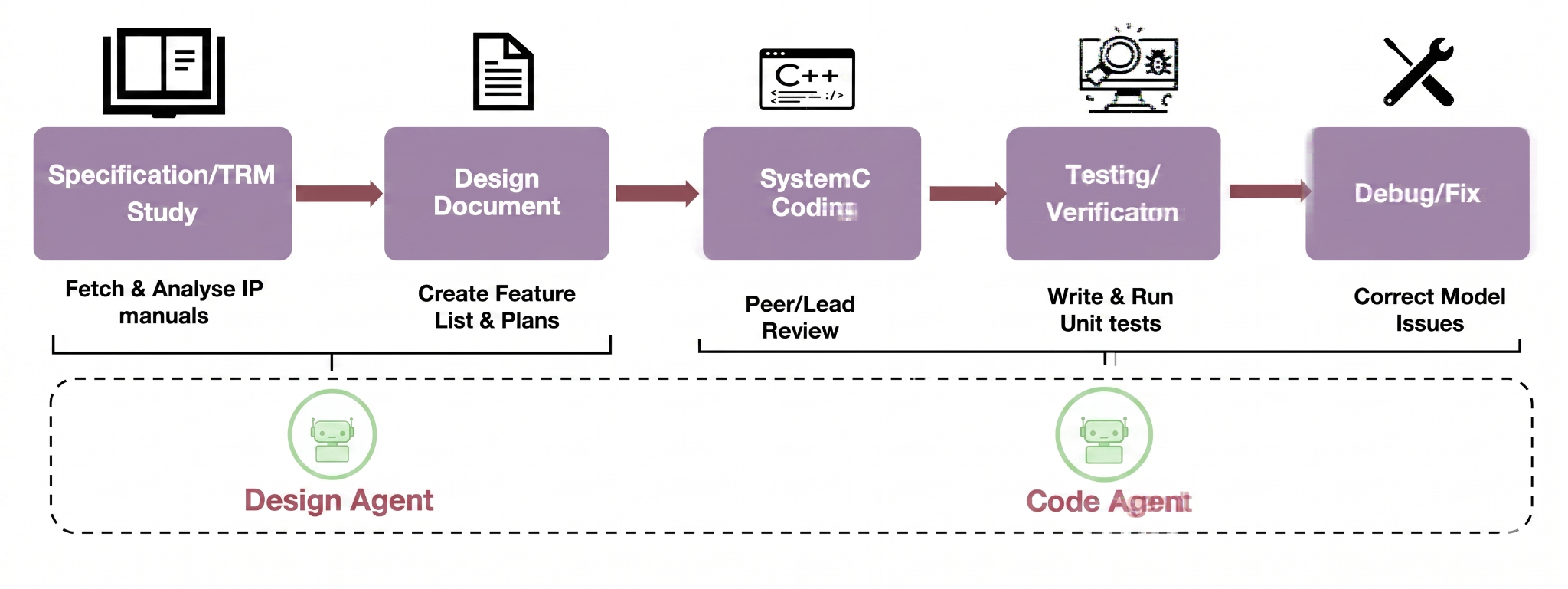
How the Agentic AI Approach Helps
What Does This Mean For You?
With an agentic approach, you don’t need to increase your SystemC headcount to take on multiple SoCs. Your existing team of engineers can supervise a workflow that ingests each IP spec, plans the model, generates and tests the code, and surfaces decisions for human approval.
What’s Next?
Now that we have told you about what TVP is and why we have built it, the next obvious question we think you have is: How does TVP do it? What’s the architecture behind TVP? What’s its workflow that turns a spec into verified code?
Read blog 2 in the series to learn about the architecture of TVP and how it can help accelerate virtual platform development.